



Seven hours of flying, and you haven't closed your eyes for a second. While your neighbor sleeps soundly, you flip your pillow for the twentieth time. Sleeping on a plane feels impossible to many people, but it’s not. It just requires a different approach than sleeping in your own bed.
In this guide, you will read why an airplane is such a difficult sleeping environment, what you can do about it, and how you can use simple breathing techniques to put your body into sleep mode while seated. A realistic expectation beforehand: airplane sleep is rarely as deep as at home. But the difference between zero hours and four hours of sleep determines how you arrive.
Why is sleeping on a plane so difficult?
An airplane cabin is just about the opposite of a good sleeping environment. Sleeping on a plane is tricky because four factors work against your sleep system simultaneously: constant noise, light and movement around you, extremely dry air, and a seating position that prevents your body from fully relaxing.
The engine noise in the cabin is roughly at the level of heavy city traffic, for hours on end. This keeps your brain half-alert, especially with unexpected sounds like announcements and the trolley. Then there’s the light: reading lights, screens, and open window shades disrupt the production of melatonin, the hormone that makes you sleepy.
Moreover, the humidity in a cabin is very low. Your mucous membranes dry out, your nose feels congested more quickly, and you subconsciously shift toward mouth breathing, resulting in a dry throat. And then there is the posture: half-upright, your body cannot completely release muscle tension, and your head looks for support that isn't there.
You don’t have to solve all these factors. Each factor you eliminate lowers the barrier to sleep a little bit.
What do you arrange before the flight?
Sleeping well on a plane starts with booking and packing. Three choices make the biggest difference:
- Choose your seat consciously. A window seat gives you a support point for your head and no one stepping over you. Avoid rows near the restrooms and the galley; there is movement there throughout the entire flight.
- Plan your sleep according to your destination time. If you are flying at night (destination time), try to sleep. If you are flying during the day, take at most a short nap. This way, you start resetting your internal clock immediately; you can read more about how that works in our article on overcoming jetlag faster.
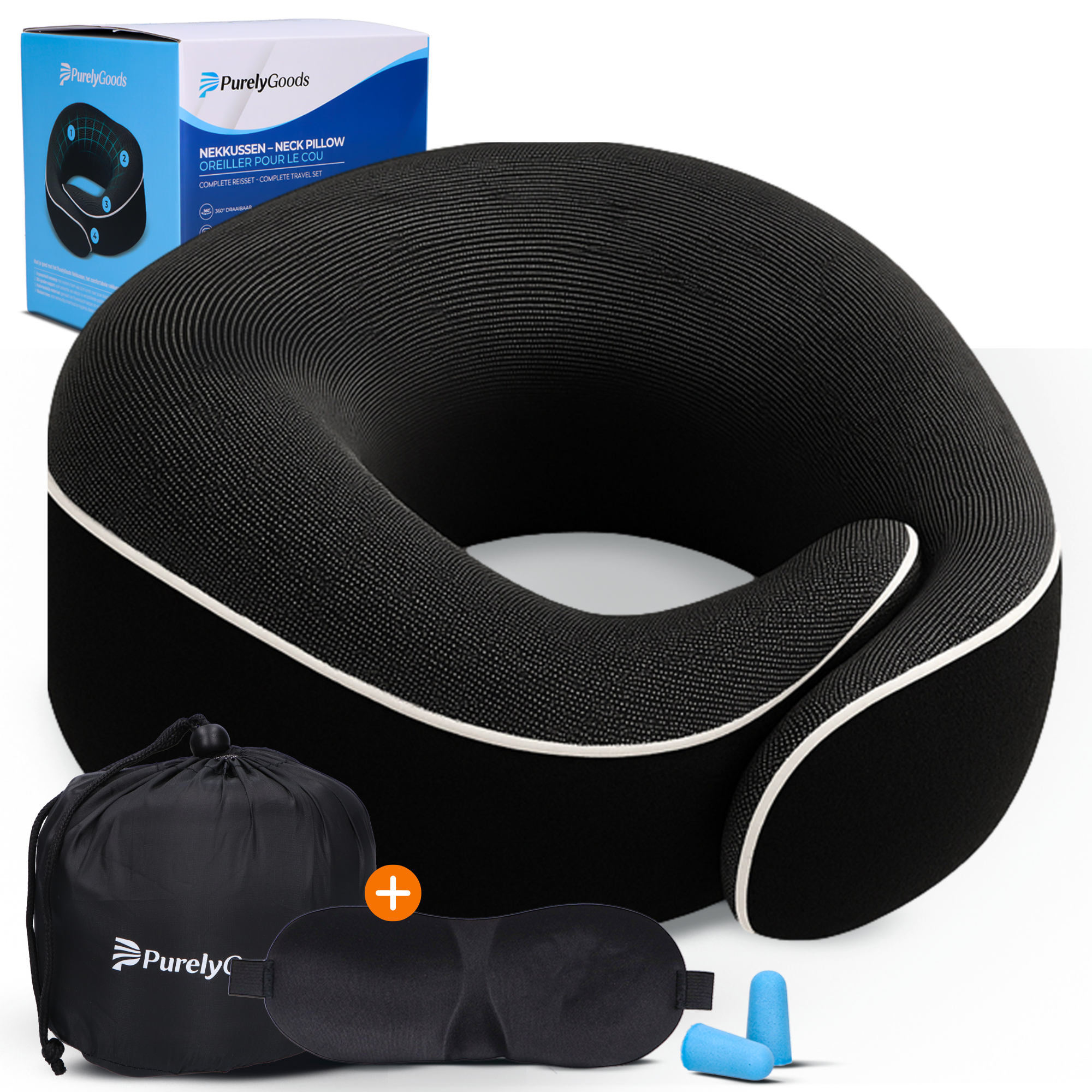
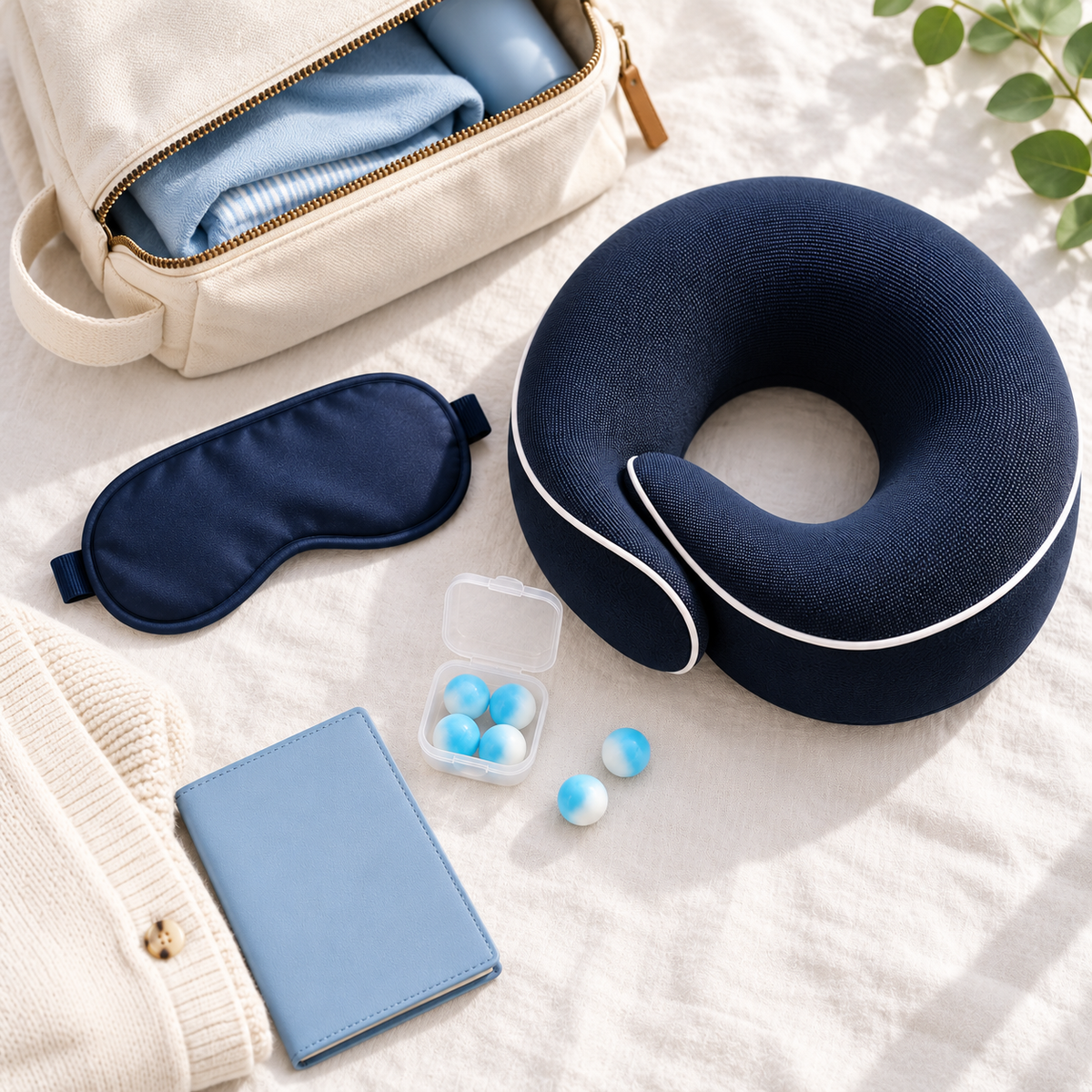
- Pack your sleep set in your carry-on. A neck pillow, sleep mask, and earplugs weigh almost nothing together and replace three of the four disruptors. You can find more inspiration for your trip among our travel accessories.
How to build a sleep environment in seat 23A
Once on board, you can build your own mini-bedroom in two minutes:
- Support your head and neck. A good neck pillow prevents your head from dropping sideways and waking you up. Turn it with the thick side under your chin if your head tends to fall forward; you can read why this support is so important in why use a neck pillow on a plane.
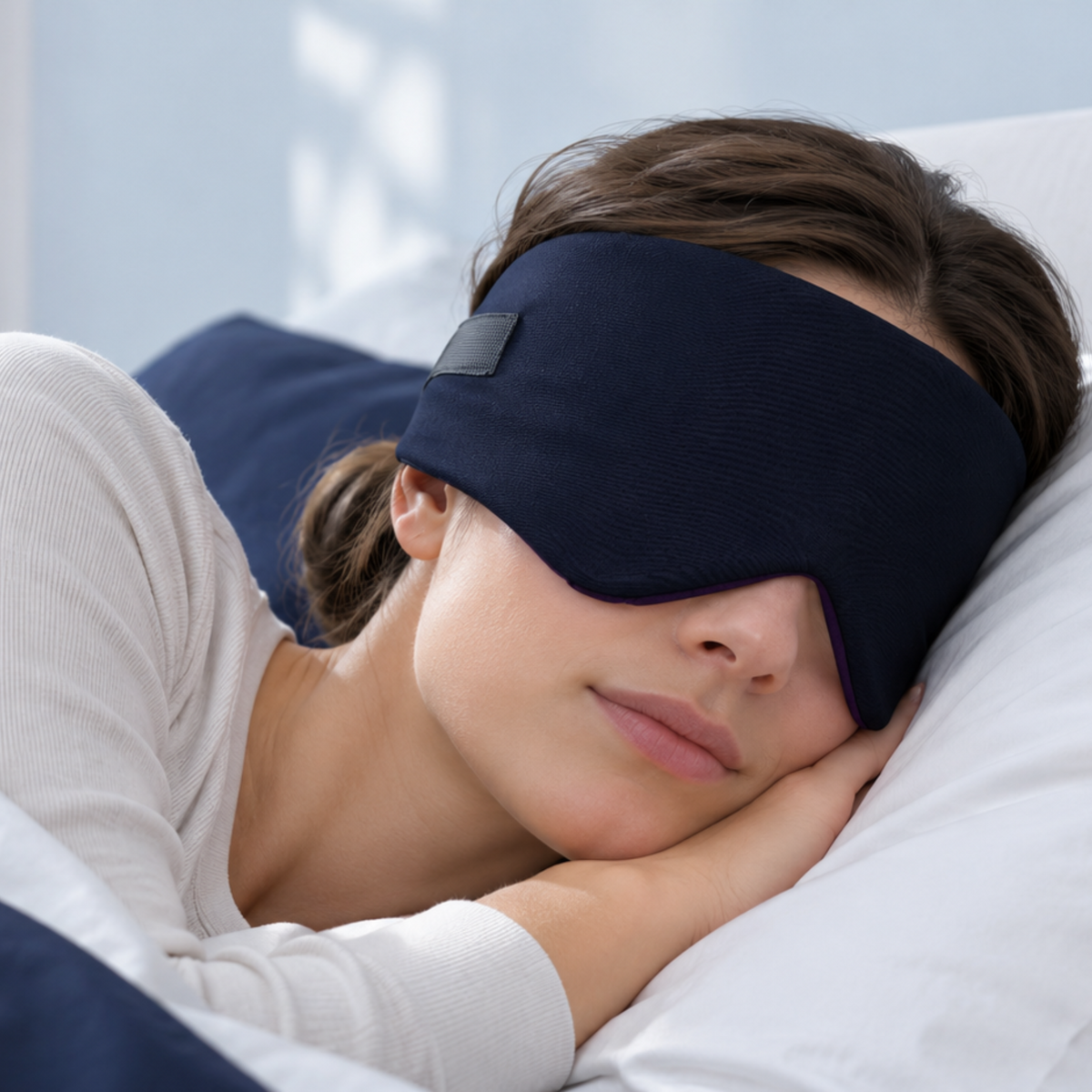
- Block out the light. A sleep mask that fits perfectly makes the difference between dozing and sleeping. Choose one that doesn’t press against your eyes; check out our sleep masks for the options. If you use your mask often on the road, wash it after returning home; read how to do this per material in cleaning your sleep mask.
- Dampen the noise. Earplugs filter out constant engine noise and chatter while still allowing you to hear safety announcements. Our silicone sleep earplugs mold to your ear, even when sitting against a headrest.
- Keep yourself hydrated. Drink water regularly before and during the flight, take lip balm with you, and use saline nasal spray if you have a dry nose. Moistened mucous membranes make it easier to breathe through your nose, which is exactly what you want when seated.
- Keep yourself warm and loose. Cabins cool down during the flight. A sweater or scarf as a blanket, warm socks (it is proven harder to fall asleep with cold feet), and your seatbelt fastened visibly over your blanket so you aren't woken up during turbulence.
- Keep your legroom clear. A bag under the seat in front of you might seem convenient, but it takes up exactly the space your legs need to relax. Put as much as possible in the overhead bin and keep only your sleep set with you.

Breathing techniques that work while seated
Environment settled, but your head won't stop racing? This is where your breathing comes in. Breathing calmly and slowly activates your rest system: your heart rate drops and your body receives the signal that it is safe enough to sleep. The beauty is that this works just as well while seated as it does lying down.
The extended exhale (for drifting off)
Inhale for four counts through your nose and exhale for six to eight counts. Keep this up for five minutes, with your eyes closed behind your sleep mask. The long exhale acts as the brake for your nervous system; most people feel their shoulders drop within two minutes.
The 4-7-8 method (for a busy mind)
Four counts in through your nose, hold for seven counts, exhale slowly for eight counts. Four rounds. The counting gives your thoughts something neutral to do, leaving less room for worrying about arrival times or tomorrow's meeting. If seven counts feels too long, halve all the counts. The full explanation of these and other techniques can be found in our breathing exercises to relax within 5 minutes.
The breath as an anchor (during turbulence or unrest)
Do you wake up from shuffling or shaking? Don't check your phone immediately. Focus your attention on the air flowing through your nose and follow ten breaths. Often, you will drift back to sleep without fully waking up.
Important for all three: breathe through your nose. Nasal breathing keeps your mucous membranes moister in the dry cabin air and naturally keeps your breathing pace low. If you notice your nose clogging up during the flight, a nasal strip can mechanically open your nostrils without medication.
Timing: when do you sleep during the flight?
Just as important as how you sleep is when. The right timing depends on your flight duration and direction.
On a night flight to the east (e.g., to Asia), you want to switch to sleep mode as soon as possible after takeoff. Eat at the airport beforehand, skip the meal service or keep it short, and build your sleep environment immediately afterward. Every two hours of sleep on board is one less hour of jetlag misery later.
On a day flight to the west (e.g., to America), do the opposite: stay awake as much as possible. At your destination, it will still be daytime for hours; those who sleep the entire flight will be wide awake at 3:00 AM on their first night. A short power nap of twenty minutes is acceptable at most.
On short flights within Europe, the math is simple: under three hours, sleeping rarely yields any benefit. Use that time to rest with your eyes closed and practice a breathing technique; that provides recovery without the sleepy, disoriented feeling of an interrupted nap.
If you are flying through multiple time zones, set your watch to destination time upon departure. This way, you automatically make every choice on board (eating, sleeping, coffee) in the rhythm you are traveling toward.
What works less well than you think?
Three popular airplane sleep strategies disappoint in practice:
- The movie marathon "until you drop". Screens full of light and action keep your brain alert. By the time fatigue wins, half the flight is over. Turn it around: sleep first, then watch.
- Sleep medication on your own initiative. Sleep aids in an airplane seat often cause drowsiness but not restorative sleep, and you remain seated for hours while sedated. Never use such things without consulting your GP.
- Exhausting yourself before the flight. Staying up the night before "so you're forced to sleep" sounds logical, but overtired people actually sleep more restlessly, especially upright in the noise. Board rested and use the techniques from this article; that is more reliable.
"A glass of wine helps you sleep on a plane" - is that true?
This is the most famous airplane sleep myth. Alcohol does indeed make you sleepy faster, but the sleep that follows is superficial and restless, especially in combination with the dry cabin air and the seating posture. Moreover, alcohol has a stronger effect at high altitudes and relaxes the muscles in your throat, making you snore more easily. Exactly what you don't want next to a stranger; read our tips against snoring while traveling.
The same applies to that double espresso at the airport. Caffeine remains active in your body for hours. If you want to sleep on board, skip both and choose water or herbal tea. You can read about how great the impact of both substances really is on your sleep in alcohol, caffeine, and sleep: the real impact.
For whom does this work less well?
Honesty is part of it: not everyone sleeps on a plane with this approach.
- Tall people and those with broad shoulders simply have too little space in economy to relax. Focus on resting instead of sleeping: eyes closed, breathing technique, muscles loose. Even rest without sleep provides recovery.
- Fear of flying cannot be breathed away. Breathing techniques dampen the tension, but with genuine anxiety, the tension is often too high to sleep. A course or professional guidance works better than any pillow.
- Short flights under three hours are rarely worth it. By the time you fall asleep, the descent begins. It is better to rest consciously and sleep at your destination.
Conclusion
Sleeping on a plane rarely happens by itself, but you can significantly increase the chances. Remove the four disruptors with a neck pillow, sleep mask, earplugs, and a warm layer; plan your sleep according to destination time, and skip alcohol and late caffeine. Then use your breathing as a sleep switch: the extended exhale or 4-7-8 brings your body into rest mode while seated. And be kind to yourself: every two hours of cabin sleep is a win for your arrival.
Curious which travel aids fit your way of sleeping? View our travel accessories; everything fits in your carry-on.
What keeps you from sleeping most on a plane: the noise, the light, or the seat?
Deel:
How to overcome jet lag faster (Asia and America variants)
Headaches due to stress: how daytime tension affects your nights and your head