


Frequently asked questions about sleep aids
Sleep aids can alleviate minor sleep problems caused by light, noise, or the way you breathe. Below, we answer the most frequently asked questions about nasal strips, mouth tape, anti-snoring mouthpieces, sleep masks, and earplugs. If you have persistent complaints, significant daytime fatigue, or suspect you have sleep apnea, please consult a doctor. These products are intended as comfort support, not as medical treatment.

FAQ
Discover questions by product
Everything you want to know about nose strips, mouth tape, anti-snoring devices, sleep masks, and earplugs, answered by our team.
Nose strips
What are nasal strips and how do they work?
Nasal strips mechanically widen your nostrils from the outside, allowing for freer nasal breathing and making it easier to breathe through your nose. They contain a flexible spring that opens up your nasal passages, drug-free and non-habit forming. The effect is felt immediately as soon as you apply the strip.
Do nasal strips help with snoring?
Yes, when you snore due to a stuffy nose or narrow nasal passage. Nasal strips improve airflow through your nose, making you less likely to breathe through your mouth, which is the main cause of snoring. For snoring caused by a receding tongue or jaw, an anti-snoring mouthpiece is more effective.
How do you apply nose strips correctly?
Wash and dry your nose well to ensure no moisture or grease remains on the skin. Remove the protective film and place the strip over the bridge of your nose, just above the nostrils. Press the ends firmly. You will immediately feel your nasal passages open.
Can nose strips be used every night?
Yes. Nasal strips contain no active ingredients and are hypoallergenic. They are designed for daily overnight use. Replace the strip every morning; re-use reduces adhesion and hygiene.
Mouth tape
What is mouth tape and why would you use it?
Mouth tape is a hypoallergenic adhesive strip that keeps your lips gently closed at night, ensuring you breathe through your nose automatically. Nasal breathing filters, warms, and humidifies the air. Many users report less snoring, less dry mouth, and more energy during the day.
Is sleeping with mouth tape safe?
Yes, provided you can breathe through your nose. The tape gently holds your lips together; if you have a stuffy nose, you can always breathe past the tape. Do not use mouth tape for severe nasal congestion, an active cold, or diagnosed sleep apnea without consulting your doctor. If necessary, combine with nasal strips for maximum nasal breathing.
Does mouth taping help with snoring?
In many cases, yes. Mouth breathing is one of the main causes of snoring: the air passes at a higher speed along the loose tissue in the throat, causing vibrations. By keeping your mouth closed with tape, you force nasal breathing, which reduces or stops snoring at the source.
How long does mouth tape stay on during sleep?
Good mouth tape stays on all night, even if you move a lot in your sleep. The medical adhesive layer adheres firmly to dry, clean skin and leaves no residue when removed. Tip: apply the tape to clean, dry skin without lip balm or cream.
Anti-snoring mouthpiece
What exactly does an anti-snoring mouthpiece do?
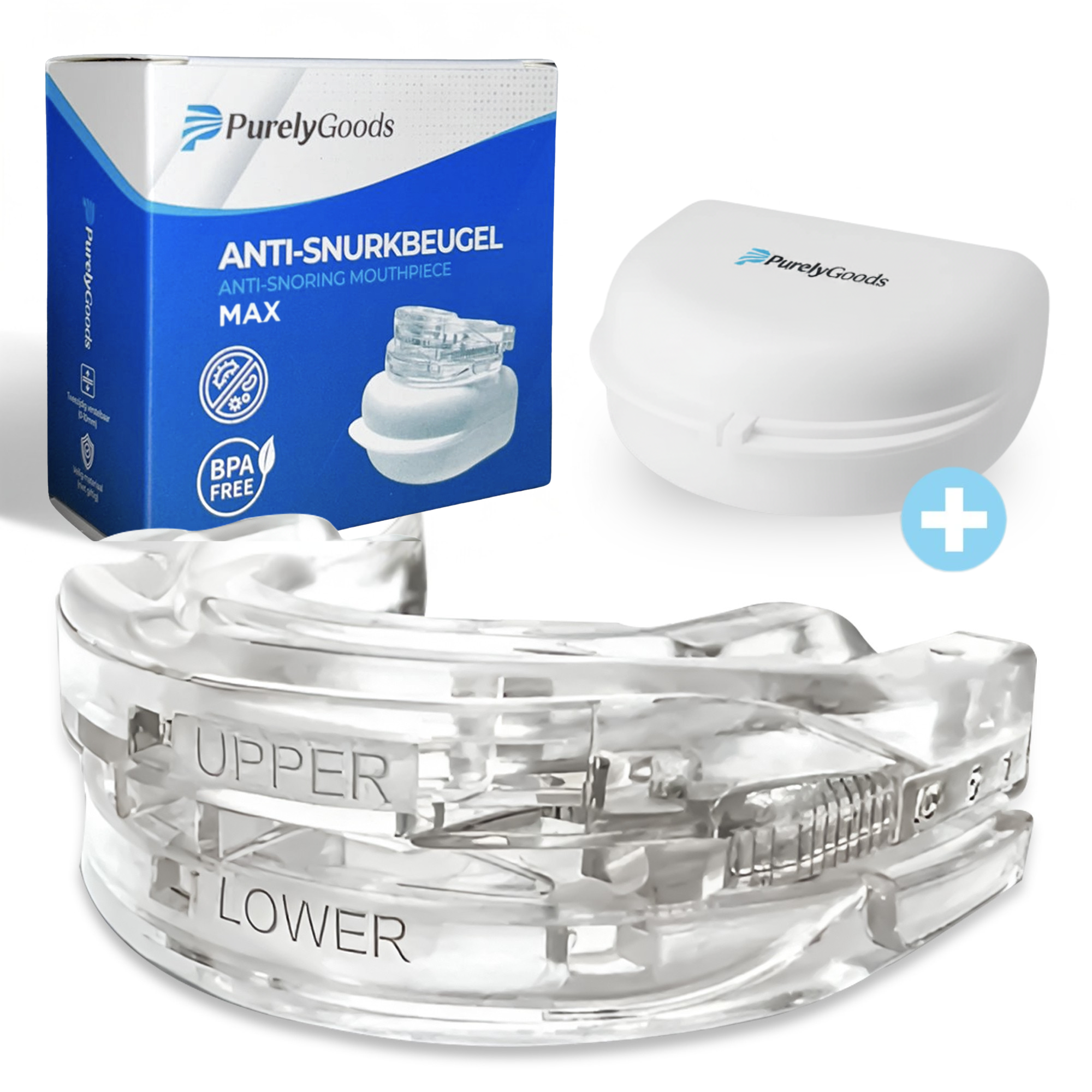
An anti-snoring mouthpiece (also called an MRA or MAD) keeps your lower jaw a few millimetres forward during sleep. This keeps your airway open and prevents your tongue from falling back against the throat wall, which is the most common mechanical cause of snoring. The result: fewer to no vibrations, quieter sleep.
Is a snore guard comfortable to sleep with?
Most users get used to it within 3 to 5 nights. Our snoring brace max is adjustable, so you can adjust the forward position yourself. Start with the minimum setting and gradually increase. Slight jaw stiffness on the first few mornings is normal and will disappear quickly. Our snoring brace comfort is softer and therefore more comfortable. View them here.
Who is a snoring brace suitable for?
This anti-snoring mouthpiece is intended for people who snore because their tongue or lower jaw sinks backward while sleeping. In cases of severe obesity, an anti-snoring mouthpiece alone may not be sufficient.
This anti-snoring mouthpiece and mouth tape are not suitable for use with sleep apnea. Do you have sleep apnea or suspect you might? Consult your doctor before using these products.
Sleep Mask
Why use a sleep mask?
Even minimal light suppresses the production of melatonin, the hormone that regulates your sleep-wake cycle. A sleep mask blocks virtually all ambient light, helping you fall asleep faster, sleep more deeply, and wake up less often. Especially effective in cases of street lighting, early sunrise, or screen use before bedtime.
What makes a good sleep mask?
Three things: complete light blockage (no light gaps at the nose or temples), no pressure on your eyes (choose a contour that allows space for your eyelids), and a breathable material. Adjustable elastic straps or a Velcro closure ensure the mask stays in place, even for side sleepers.
How to choose the right sleep mask for you?
Do you sleep on your side? Choose a low profile that won't press against your pillow. Do you suffer from dry eyes? Choose a sleep mask that does not make contact with your eyelids. Do you travel a lot? Choose a foldable model with a storage pouch. Material (silk, bamboo, foam) is a personal preference; fit is more important. View our sleep masks here.
Earplugs
Why use earplugs for sleeping?
Ambient noise, even below your conscious hearing threshold, disrupts your sleep cycles and prevents deep sleep. Earplugs reduce noise exposure by 20 to 30 dB, enough to muffle street noise, a snoring partner, or early risers without making you miss your alarm clock.
Which earplugs are best for sleeping?
Soft silicone earplugs that attenuate enough (20–30 dB) but do not fully isolate. Foam earplugs attenuate more but feel uncomfortable for side sleepers due to pressure. Our sleep earplugs are specifically designed for all-night comfort: low profile, hypoallergenic material, reusable.
Are earplugs safe for daily use?
Yes, provided you keep them clean. Clean reusable earplugs with lukewarm water after each use and let them dry before storing them. Replace silicone earplugs when they lose their shape. If you have sensitive ear canals or frequent ear infections: consult your general practitioner.
Didn't find what you were looking for?