



"One glass of wine actually helps me sleep well." It is perhaps the most persistent sleep myth in existence. And its counterpart, "coffee doesn't affect me," is in second place. The real impact of alcohol and caffeine on your sleep is greater than most people realize, and that is precisely the problem: you often don't notice the damage.
In this article, you will read about what both substances actually change in your night, why you hardly notice it yourself, and how you can continue to enjoy coffee and a drink without wrecking your sleep.
What does caffeine really do to your sleep?
Caffeine doesn't wake you up; it masks your fatigue. While you are awake, the substance adenosine builds up in your brain. The more adenosine, the sleepier you become. Caffeine blocks the receptors for that signal: the fatigue is still there, but you don't feel it.
The problem lies in the breakdown time. The half-life of caffeine is five to seven hours. Of the coffee you drink at 4:00 PM, about half is still active in your blood at 10:00 PM. Research shows that caffeine can increase sleep onset latency and shorten total sleep time, even when consumed six hours before bedtime.
What about "I fall asleep just fine with it"? That may be true, and yet you lose something. Caffeine primarily reduces your deep sleep, the most restorative part of the night. You may sleep for eight hours, but you wake up feeling less rested. Furthermore, caffeine can delay the production of melatonin, shifting your entire sleep cycle slightly.
What does alcohol really do to your sleep?
Alcohol feels like a sleep aid because the first part is true: it helps you fall asleep faster, and you even sleep deeper than normal for the first few hours. Then the situation flips.
In the second half of the night, when alcohol is being metabolized, your sleep becomes fragmented. You wake up (briefly) more often, usually without remembering it. Your REM sleep, which is important for your memory and emotional balance, is suppressed at first and then returns in a restless state, resulting in vivid dreams.
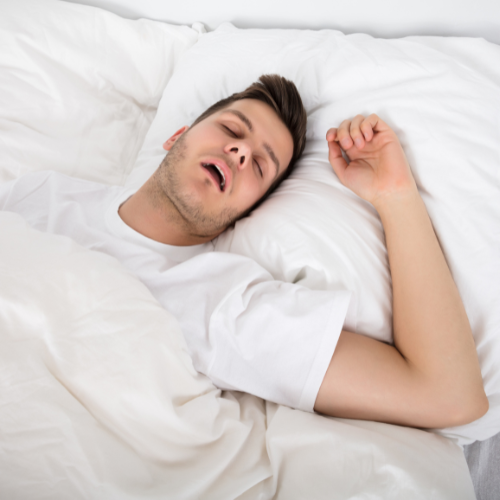
There is a second way in which alcohol disturbs your night, and it's one you don't hear yourself: alcohol relaxes the muscles in your throat. This makes you snore sooner and louder, and for sensitive people, it increases breathing pauses. If you sleep next to someone, that person pays the price as well. You can read why that throat relaxation leads to snoring in why do I suddenly snore?
Caffeine and alcohol compared
|
|
Caffeine |
Alcohol |
|
Falling asleep |
Takes longer, even hours after consumption |
Actually happens faster |
|
Staying asleep |
Lighter sleep |
Deep in the first half, fragmented in the second |
|
Deep sleep |
Less |
Less restorative overall |
|
REM sleep |
Slightly disturbed |
Severely disturbed |
|
Snoring |
No direct effect |
Worsens snoring and breathing pauses |
|
Common factor |
You hardly notice the damage yourself |
You hardly notice the damage yourself |

The vicious cycle of the day after
This is where it gets nasty. After a night of alcohol, you wake up hungover and tired. What do you do? Extra coffee. That extra caffeine, often consumed in the afternoon, disrupts the following night. Which leads you to wake up tired again, and perhaps feel like you "need something to relax" in the evening.
This is how the two substances sustain each other: alcohol ruins the night, caffeine masks the day. If you are chronically tired, it is wise to look at this cycle before looking for other causes. Tossing and turning, worrying, or waking up tired often have multiple causes; in our pillar on how nutrition affects your sleep we outline the broader picture of eating, drinking, and sleeping.
How to handle it smarter?
You don't have to quit coffee or never toast again. With these guidelines, you can significantly limit the damage:
- Caffeine: set a cutoff time. Drink your last coffee, cola, or energy drink no later than six to eight hours before bedtime. If you sleep at 11:00 PM, 3:00 PM is a safe limit. Craving the taste? Decaf exists.
- Watch out for hidden caffeine. Tea (except herbal tea), chocolate, and many soft drinks also contain caffeine. Energy drinks are especially underestimated.
- Alcohol: allow two to three alcohol-free hours before bed. The earlier in the evening, the smaller the disruption. And the fewer glasses, the better your second half of the night will be.
- Drink water alongside alcohol. It doesn't just dilute; it also prevents you from waking up dehydrated with a dry mouth at night.
- Do you snore after alcohol? Skip the nightcap on nights you sleep next to someone, and address the mouth breathing that alcohol triggers. Our anti-snoring products only help if the cause is right; for alcohol, cutting back is the first step.
Every body reacts differently. Some people break down caffeine slowly and notice the effects of even morning coffee at night. Test it for yourself: stop caffeine after lunch for two weeks and compare how you wake up.
What do you notice when you cut back?
Realistic expectations are part of the process. The first nights without a nightcap can even feel more restless: your body misses the artificial "knocking out" effect. Stay the course.
After about a week without late caffeine and with less alcohol in the evening, most people report that they sleep through the night better and wake up feeling fresher. After two to four weeks, the difference in energy during the day is usually clearly noticeable. If you continue to sleep poorly or feel extremely tired despite these adjustments, discuss it with your GP; something else might be going on.
Summary
Alcohol and caffeine both disrupt your sleep in a way that you hardly feel yourself: caffeine steals your deep sleep and prolongs your sleep onset time for hours after consumption; alcohol helps you drift off quickly but fragments the second half of the night and worsens snoring. The solution is not a ban, but timing: caffeine no later than six hours before bed, alcohol in moderation and early in the evening, and water in between. Give your body a few weeks; you will notice the difference mostly in the mornings.
Curious about what other food and drinks do to your nights? Read our extensive article on nutrition and sleep.
What would you find most difficult to give up: that last coffee or your nightcap?
Deel:
Breathing exercises before bed: how to help your body relax
Breathing for strength training: how to build more strength and stability