



Many people lie awake at night with a racing mind and a tense body. Sleeping pills, supplements, or relaxing teas sometimes offer temporary relief, but often don't solve the real problem: the body doesn't calm down.
Paced breathing; slow and conscious breathing at a steady rhythm, is a simple, natural technique that demonstrably improves your sleep quality. Research shows that this method calms the nervous system, lowers heart rate, and deepens sleep.
What is paced breathing?
Paced breathing means slowing down your breathing and distributing it evenly over a fixed rhythm. Instead of breathing fast and shallowly, you might inhale for 5 seconds and exhale for 5 seconds.
This technique stimulates the parasympathetic nervous system, the part of your autonomic nervous system responsible for relaxation, recovery, and rest.
By breathing at a slow pace:
- Your heart rate decreases
- Stress system activity is reduced
-
Your body prepares for deeper, uninterrupted sleep
What does the science say?
A groundbreaking study investigated the effects of paced breathing on people with insomnia Tsai et al. (2014). Fourteen self-reported poor sleepers (SRI) practiced breathing at a rate of 0.1 Hz (i.e., 6 breaths per minute) for 20 minutes daily.
The results were striking:
- Shorter sleep onset latency
- Less nocturnal awakening
- Higher sleep efficiency
- Improved heart rate variability (HRV), an important measure of nervous system balance
The conclusion: paced breathing activates the parasympathetic nervous system and improves sleep quality naturally.
What is the ideal breathing frequency?
The effect of paced breathing is closely linked to the rhythm of your breathing. Research and practical experience indicate that a breathing frequency of 6 breaths per minute is optimal for relaxation.
Most commonly used breathing ratios:
-
5.5:5.5 — 5.5 seconds in, 5.5 seconds out (see video below)
-
Simple and balanced
-
Ideal for beginners
-
-
4:6 or 3:7 — shorter inhale, longer exhale
-
More strongly lowers heart rate
-
Enhances vagal activity
-
Extra effective for tension or worrying thoughts
-
Note: choose a ratio that suits your breathing capacity. Do you feel light-headed? Then go a little faster or shorten the exhalation.
Sources:
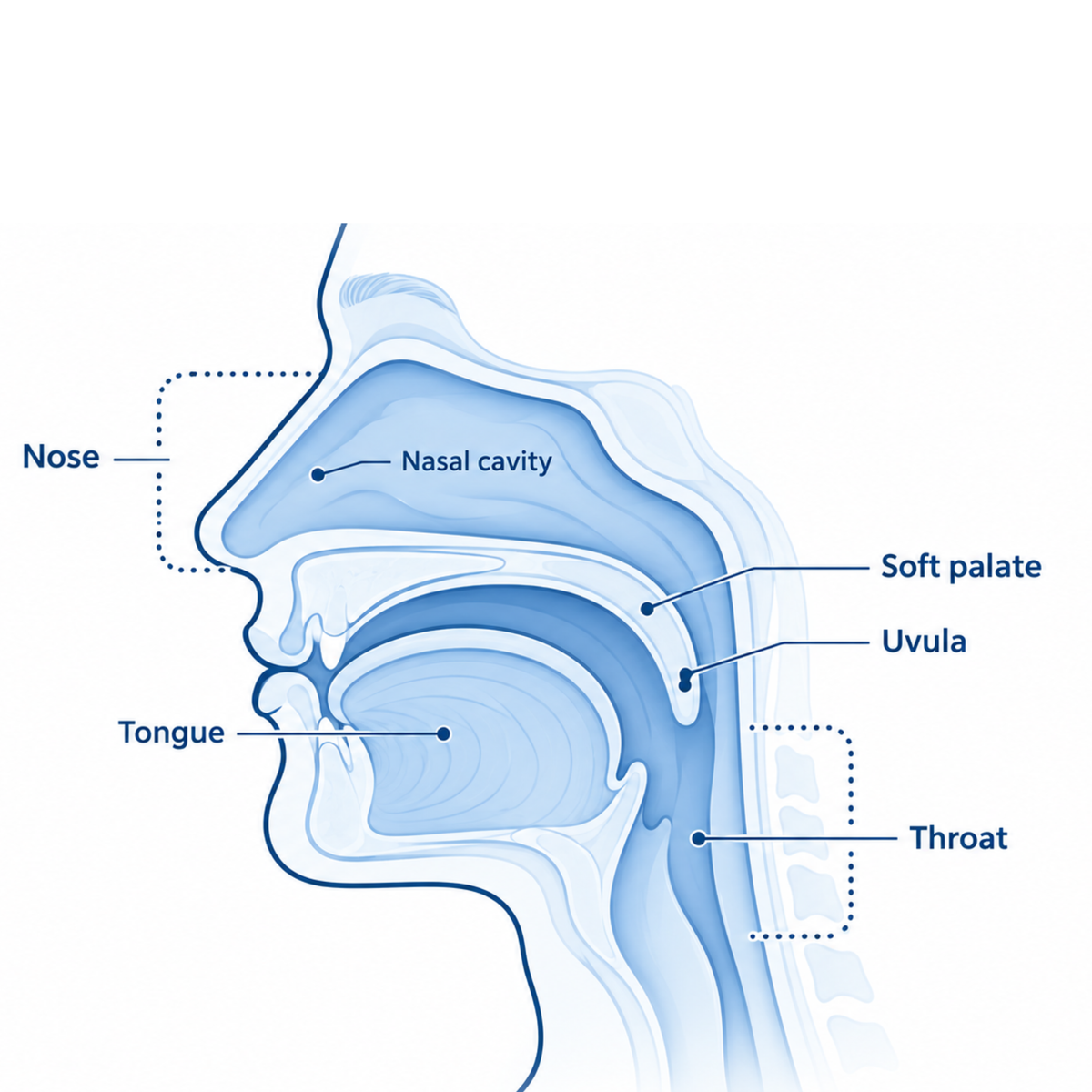
The role of nasal breathing
For optimal results, breathing through the nose is essential. Nasal breathing:
- Filters and warms the air
- Improves oxygen uptake
- Stimulates the vagus nerve
- Supports the natural relaxation response
However, many people unknowingly breathe through their mouths, especially at night. This disrupts breathing quality and, consequently, your sleep. Supportive products can offer a solution here.

Support your breathing with PurelyGoods
At PurelyGoods, we believe in natural, effective solutions for better sleep. Paced breathing forms a strong foundation for this, and with the right support, you can get even more out of it.
Nasal strips – open your airways
If your nose quickly becomes congested or you have difficulty with free nasal breathing, nasal strips are a practical solution.
- Facilitate deep breathing
- Ideal in combination with breathing exercises
- Increase comfort during sleep
👉 View PurelyGoods nasal strips
Mouth tape – for natural nasal breathing
By subtly keeping your mouth closed during the night, you prevent mouth breathing.
- Encourages calmer breathing
- Improves sleep quality
- Supports the effectiveness of paced breathing

How to apply paced breathing in your sleep routine
Good sleep starts during the day, but is determined by your evening ritual. This is how you easily integrate paced breathing into your routine:
- Choose a quiet moment: preferably right before bed
- Sit or lie comfortably
- Inhale through the nose (e.g., 4 sec), exhale through the nose (e.g., 6 sec)
- Optionally use a metronome app or breathing guide
- Repeat this for 5–20 minutes, depending on your experience and needs
Consistency is important. Start small and build up slowly.
What does paced breathing do to your nervous system?
This breathing technique is directly connected to your autonomic nervous system, especially the parasympathetic part. This system regulates rest and recovery, unlike the sympathetic system which is active during stress.
By paced breathing you activate:
- Slow heart rate
- Low blood pressure
- Increased heart rate variability (HRV)
- A state of physical and mental rest
In a future blog, we will delve deeper into the parasympathetic nervous system and how you can structurally strengthen this system.
Conclusion: a natural way to sleep better
Paced breathing is a simple, proven effective technique to improve your sleep quality without aids or medication. By breathing consciously and slowly, you calm down faster, fall into a deeper sleep, and wake up more rested.
In combination with natural aids such as mouth tape and nasal strips, you pave the way for a deep, restorative night's sleep.
What can you do now?
✔️ Try 10 minutes of paced breathing tonight with a 5.5:5.5 ratio
✔️ Use PurelyGoods mouth tape and nasal strips to support your nasal breathing
✔️ Integrate it into your sleep routine for lasting results
Deel:
How many benefits are you missing out on due to your unconscious breathing?
What is the difference between the sympathetic and parasympathetic nervous systems?