


Mouth breathing during sleep means you breathe air through your mouth instead of your nose. This may sound harmless, but it has concrete consequences for your health, sleep quality, and even your teeth. Nasal breathing is the physiologically correct way to breathe: the nose filters, warms, and humidifies the air before it reaches your lungs. The mouth does not do this.
What is mouth breathing?
Mouth breathing occurs when the nasal passage is too narrow or blocked, or when someone simply never unlearned breathing through the mouth. During the day, it's hardly noticeable, but during sleep, your body loses conscious control over breathing patterns, and many people unconsciously breathe through their mouths.
The nose is the primary respiratory organ. Nasal hairs trap dust particles, the nasal mucous membrane regulates humidity, and the nasal passage warms cold air to body temperature. All these functions are completely lost when you breathe through your mouth.
Mouth breathing is a habit for many people that started in childhood, for example due to chronic colds, allergies, or a too-small nasal passage. Without a targeted approach, this pattern perpetuates itself.
Consequences of Mouth Breathing for Your Night's Rest
Sleeping with an open mouth has a direct effect on how deeply you sleep. The airflow through the mouth is less controlled than through the nose, causing the soft tissues in your throat to vibrate more quickly. That vibration is heard as snoring.
Mouth breathing also reduces oxygen uptake. Nitric oxide, a substance that dilates blood vessels and improves oxygen uptake in the lungs, is only produced in the nasal cavity. Those who breathe through their mouths completely miss out on this substance during sleep.
The result is that your body recovers less efficiently during the night. You may spend more hours in bed and still wake up tired because the quality of sleep is structurally lower than with nasal breathing.
Physical Disadvantages Outside of Sleep
The consequences of nocturnal mouth breathing are not limited to the night. Many people with this pattern wake up with a dry mouth or dry throat, an increased chance of plaque and gum problems, and sometimes a dull headache.
A dry oral cavity is an ideal environment for bacterial growth. Saliva has an antibacterial effect, but that effect is lost if the mouth is open all night. This ultimately increases the risk of cavities, gum inflammation, and bad breath in the morning.
In children, chronic mouth breathing also affects jaw and facial development. A long face, a high palatal arch, and poor tooth alignment are more often seen in children who consistently breathe through their mouths.
Mouth Breathing in Children: Extra Attention Needed
In children, mouth breathing is a stronger signal than in adults. Children naturally breathe through their noses, especially during sleep. Mouth breathing in children often indicates enlarged tonsils or adenoids, allergies, or an abnormal nasal structure.
When a child consistently breathes through the mouth, it affects not only sleep quality but also concentration, behavior, and school performance. Sleep deprivation due to mouth breathing is an underestimated cause of attention problems in children.
If you suspect chronic mouth breathing in a child, a visit to the ENT specialist is the appropriate step. They can determine the cause and decide if treatment is necessary.
Reducing Mouth Breathing: What Works?
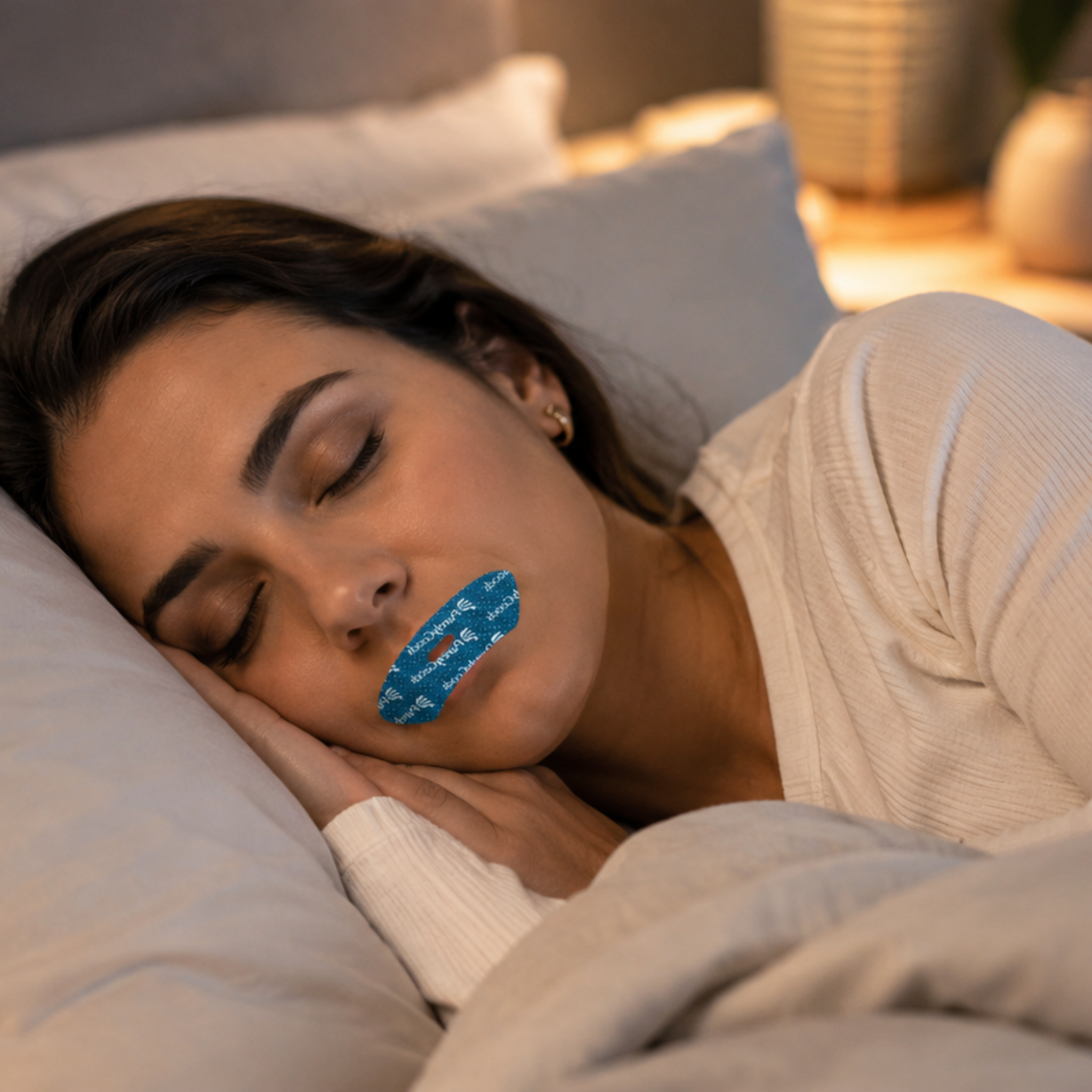
The most direct way to reduce mouth breathing during sleep is mouth tape. Mouth tape keeps the lips closed during sleep and forces the body to breathe through the nose. This only works if the nasal passage is sufficiently open.
Optionally combine mouth tape with nose strips if you find your nose blocked at night. Nose strips open the nostrils from the outside and increase nasal airflow, making nasal breathing easier.
In addition to aids, it helps to consciously breathe through the nose during the day, work on a clear nasal passage through nasal rinsing with salt water, and optimize sleeping posture. Sleeping on your back increases the chance of mouth breathing; sleeping on your side inhibits this pattern. Not sure if mouth breathing affects you? First, take our mouth breathing self-test.
Try PurelyGoods mouth tape and sleep with a closed mouth again.


Deel:
Nose or mouth breathing? How to test it yourself at home
Snoring due to Nasal Congestion: Causes and Solutions