





Many people look for ways to reduce stress and improve sleep, but get stuck on the same problem: their minds remain ‘on’. You go to bed, but relaxation doesn't come automatically.
A good evening routine can make all the difference here. Not through one trick, but through small habits that help your body wind down. In this article, you will discover how stress and sleep are related, what happens in your body, and how to build an evening routine that really works.
What is an evening routine (and why does it help reduce stress and improve sleep)?
An evening routine is a fixed series of actions you perform every evening to prepare your body and mind for sleep.
The goal is simple: to switch your nervous system from ‘active’ to ‘rest’.
During the day, your body is often in active mode (sympathetic nervous system). In the evening, you want to enter the recovery phase (parasympathetic). Without a transition, your body remains alert, and you notice this as soon as you lie in bed.
A good routine acts as a signal: it is safe to relax.
How does stress that disturbs your sleep arise?
Stress and sleep are directly connected.
When you experience stress, your body produces cortisol. This hormone helps you stay alert, but it works against your sleep.
What happens:
- Your heart rate remains higher
- Your breathing becomes shallower
- Your thoughts remain active
- Your body produces less melatonin
The problem?
Many people take this state with them to bed.
Think of:
- working late
- scrolling on your phone
- worrying without resolution
Your body doesn't get a clear signal that the day is over.
What actually helps to reduce stress before sleep?
An effective evening routine consists of simple, repeatable steps. Not a perfect schedule, but rhythm.
1. Create a clear transition from day to evening
Stop working or using screens at least 30–60 minutes before bedtime.
This helps your brain to ‘let go’.
👉 Tip: set a fixed "closing time" for your day
2. Reduce stimuli (light, sound, information)
Bright light and screens keep your brain active.
What helps:
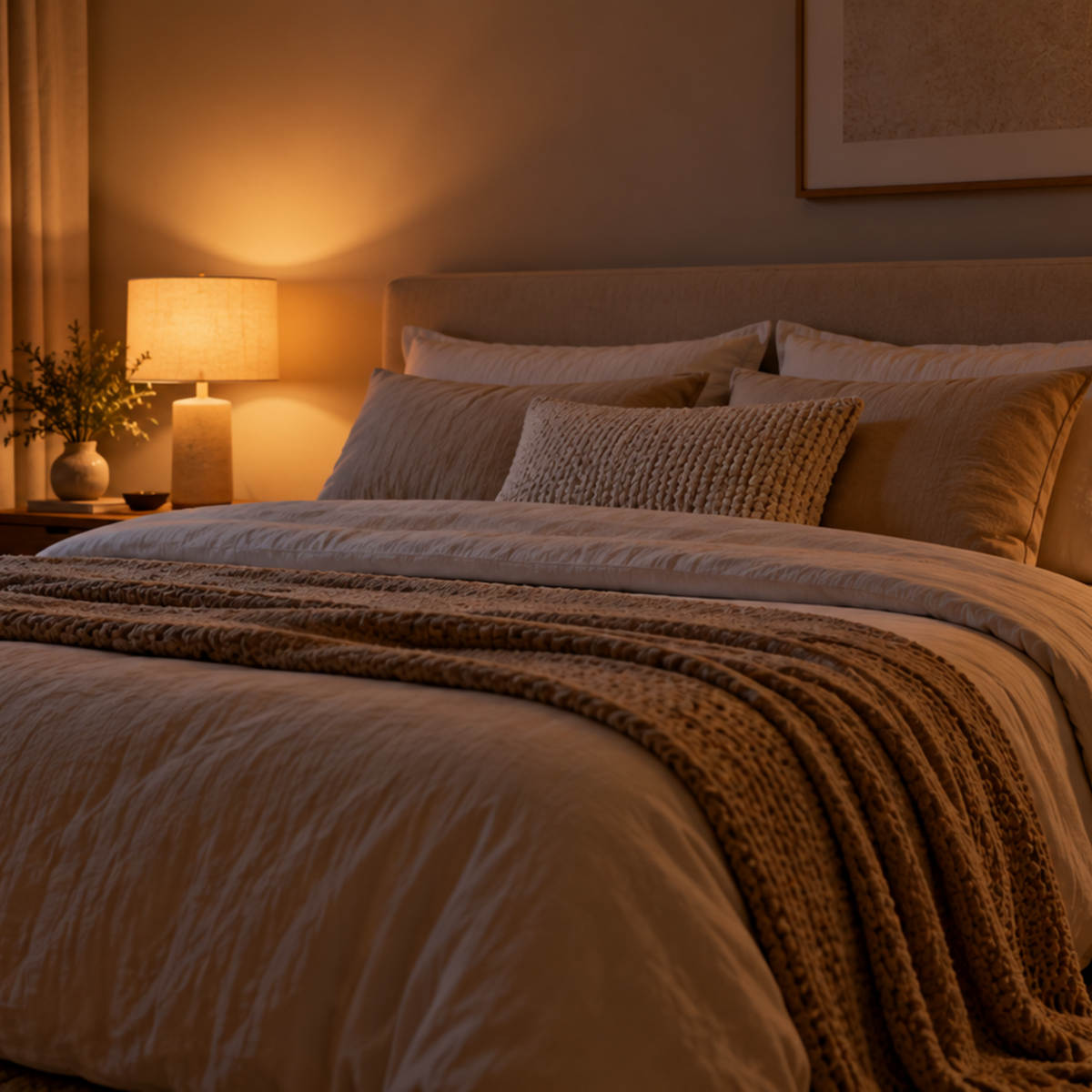
- using warm light
- turning off notifications
- creating a calm environment
You don't have to do everything perfectly; fewer stimuli already means progress.
3. Breathing as a reset for your nervous system
Your breath is a direct gateway to relaxation.
Slower breathing → signal of safety.
Try:
- 4 seconds in
- 6 seconds out
- 2–5 minutes
This literally helps your body to "slow down".
4. Clear your head by writing it down
Much stress comes from unfinished thoughts.
A simple exercise:
- write down what's still on your mind
- note what's important for tomorrow
Your brain then no longer needs to hold on to it.
5. Choose one relaxing habit
Think of:
- reading
- calm music
- warm shower
- light stretching
It's not about what you do, but that it is recognizable and repeatable.
Some people find that mouth tape helps them breathe more calmly through the nose, which supports relaxation while falling asleep. This aligns with how breathing affects your nervous system.
What works less well (but is often thought to)?
Not everything that sounds ‘logical’ truly helps.
“I'll just go to bed earlier”
If you're still stressed, you'll take that stress with you to bed.
“I watch TV to relax”
Can help, but often you remain mentally active.
“I need to be perfectly relaxed”
This actually creates extra pressure.
Relaxation is not a switch, but a process.
“I'll solve stress in bed”
Your bed should be associated with rest, not thinking.
For whom is an evening routine suitable (and for whom not)?
| Situation | Works well? | Why |
|---|---|---|
| Busy mind before sleep | ✅ Yes | Provides structure and calm |
| Irregular rhythm | ✅ Yes | Helps your body adjust |
| Acute stress / panic | ⚠️ Limited | Requires extra support |
| Medical sleep problems | ⚠️ Supplementary | Not a substitute for treatment |
An evening routine is not a miracle cure, but it is a strong foundation.
Frequently asked questions about stress reduction and sleep
Does an evening routine really help against stress?
Yes, because your body learns to recognize when it's allowed to relax. Through repetition, this effect becomes stronger and faster.
How long does it take for it to work?
You usually notice a difference within a few days, but true improvement occurs after 1–2 weeks of consistent use.
Do I have to do the exact same thing every night?
No. It's about the structure, not perfection. Consistency is more important than the exact same steps.
What if my mind keeps wandering?
That's normal. Try not to force it. Stick to your routine and accept that relaxation sometimes takes time.
Conclusion
Stress and sleep are inextricably linked. If you don't make a transition in the evening, your body remains active, and you notice this in bed.
A good evening routine helps you slow down step by step. Not with complex techniques, but with simple habits you repeat every day.
Start small. Choose one or two elements and build up slowly.
👉 Which step could you already try tonight?


Deel:
Blocked nose and poor sleep: causes, consequences and solutions
The pure kitchen: sustainably enjoying flavour and tranquility