



Nasal breathing is much more than a habit. It is an essential function that supports our health, sleep, and overall vitality. Yet, many people automatically breathe through their mouths, especially during sleep. In this blog, you will discover why nose breathing is so much healthier, how it works in your body, and how you can train yourself for more calm, energy, and better sleep.
What happens in your body during nasal breathing?
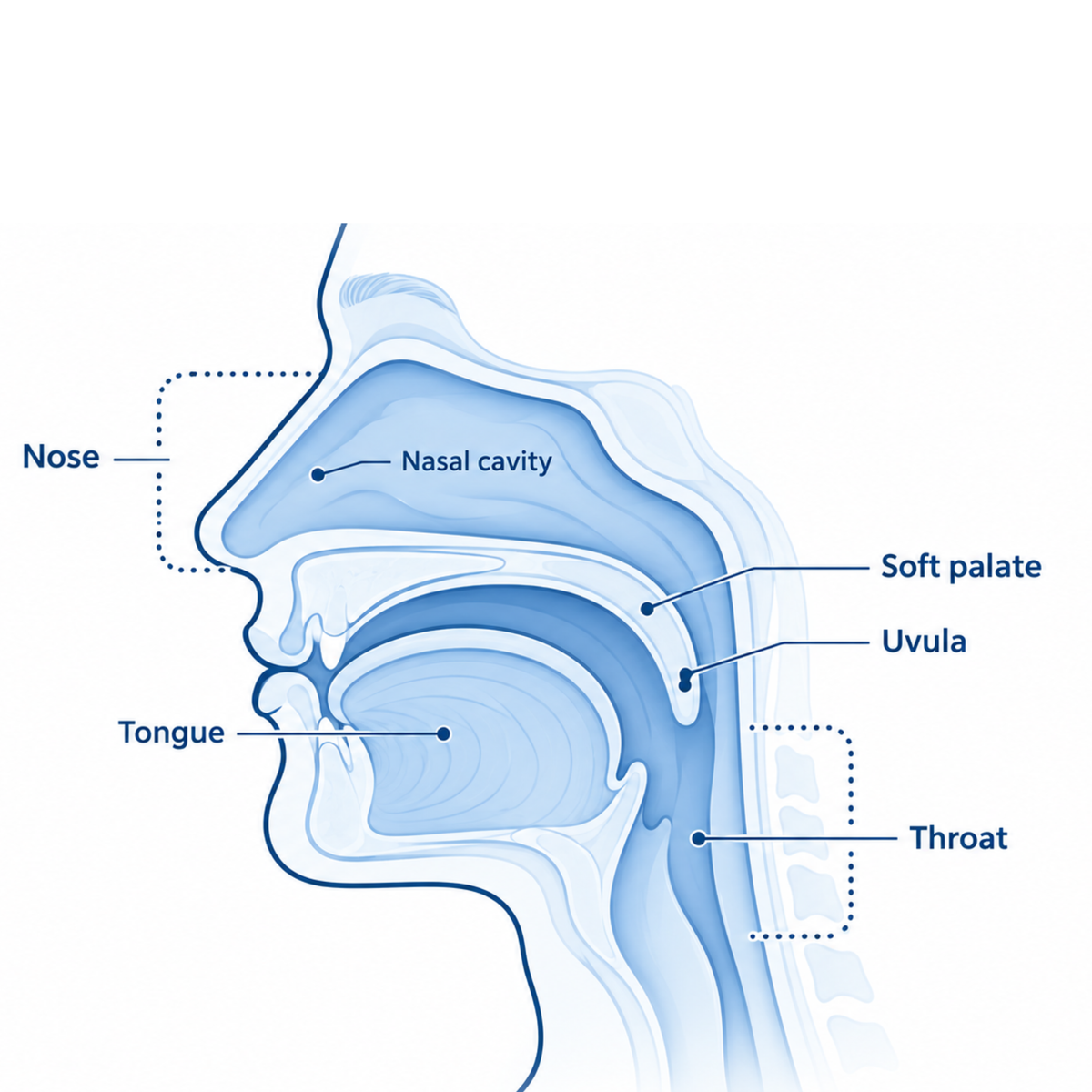
A natural air filter
Your nose is designed to filter, warm, and humidify air. Nasal hairs and mucous membranes trap dust, bacteria, and allergens. At the same time, your nose warms and humidifies the air before it reaches your lungs. This protects your airways and ensures efficient oxygen uptake.
Optimal oxygen uptake
When you breathe through your nose, nitric oxide is released in your nasal sinuses. This substance helps dilate your blood vessels, thereby improving oxygen supply to your body cells. That means: more energy, better focus, and less fatigue.
Activation of the parasympathetic nervous system
Nasal breathing stimulates the parasympathetic nervous system, the part of your autonomic nervous system that regulates rest, recovery, and relaxation. This lowers your heart rate, decreases your blood pressure, and calms your body. Exactly what you need for a good night's sleep.
Nasal breathing vs. mouth breathing
Why mouth breathing is detrimental
Breathing through your mouth may seem harmless but has significant disadvantages:
- You miss the filtering function of your nose: a higher risk of infections.
- The air enters drier and colder: irritation of your throat and airways.
- You activate your stress system: higher heart rate and more shallow breathing.
Effect on sleep quality
Mouth breathing at night can lead to:
- Snoring: an open mouth more easily causes vibrations in your throat.
- Dry mouth: less saliva production increases the risk of dental problems.
- Sleep interruptions: less oxygen and more restless sleep.

What are the benefits of nasal breathing during sleep?
1. Calmer and deeper sleep
By breathing through your nose, you promote calm breathing and reduce your stress level. You enter deep sleep stages more easily and wake up less often.
2. Less snoring and breathing stops
Your tongue naturally stays in a better position with nasal breathing, keeping your airway open. This reduces the chance of snoring and obstructive sleep apnea (OSA).
3. Better for your teeth and jaw
Nasal breathing helps keep your tongue in the correct position. This is beneficial for the alignment of your jaw and teeth, especially in children, but also in adults.
4. Fresher breath and healthier mouth
A closed mouth ensures better saliva production, reducing the chance of bacteria. This prevents dry mouth and bad breath when waking up.
Why do so many people breathe through their mouths?
- Blocked nose: due to allergies, colds, or air pollution.
- Bad breathing habits: often breathing through the mouth during the day.
- Sleeping position: sleeping on your back can block the airway.
- Weak jaw or tongue muscles: causing your mouth to fall open during sleep.
The good news? You can train and support nasal breathing.
Practical tips for learning nasal breathing
1. Breathe consciously during the day
Take a few moments several times a day to observe your breathing. Are you breathing calmly through your nose or unconsciously through your mouth? Remind yourself to return to nasal breathing.
2. Use breathing techniques
Try these simple methods:
- Deep belly breathing: place a hand on your stomach, inhale deeply through your nose, feel your belly expand.
- Box breathing: inhale for 4 counts, hold for 4 counts, exhale for 4 counts, pause for 4 counts.
- '4-7-8' method: inhale for 4 counts, hold for 7 counts, exhale for 8 counts.
3. Make nasal breathing part of your evening routine
A few minutes of conscious breathing before bed helps your body switch to rest. Dim the lights, turn off screens, and breathe calmly through your nose. Optionally combine with meditation or gentle movement.
Tools that support nasal breathing
Nasal strips
These nasal strips you pull over your nasal bridge and ensure your nostrils are slightly more open. Especially useful for mild congestion or if you notice you breathe through your mouth at night.
Mouth tape
Soft and skin-friendly mouth tapes that keep your lips together. This encourages you to breathe through your nose during sleep. Always choose a safe variant specifically designed for sleeping.
Note: If you have serious breathing problems or sleep apnea, always consult a doctor before using any aids.

What will you notice in daily life?
- You will feel more alert and energetic during the day.
- You will experience less stress and more inner peace.
- You will sleep deeper and wake up more refreshed.
- You will have less trouble with snoring or a dry mouth.
Nasal breathing is a small adjustment with a big impact.
Summary: the power of nasal breathing
Nasal breathing is a natural, powerful way to improve your health, sleep, and well-being. By consciously breathing through your nose, especially during sleep, you give your body the chance to recover, relax, and function optimally. It requires attention and practice, but the results are noticeable.
Do you want to make nasal breathing a regular part of your routine? Start small, breathe consciously, and discover the difference.

Deel:
The mysterious world of nightmares
The impact of nose strips and mouth tape on health