


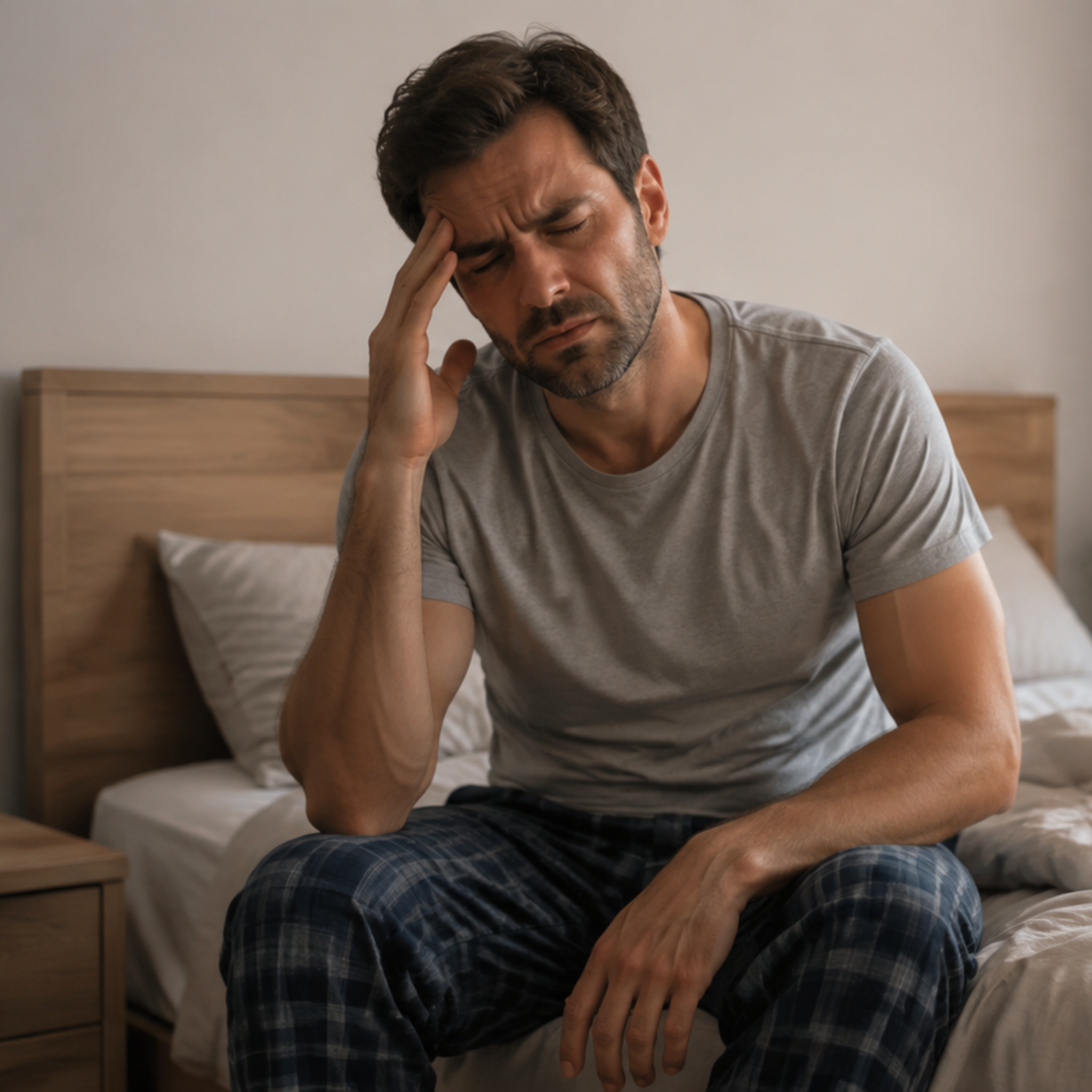
Finally, vacation. You're looking forward to sleeping in, but on your first night in the hotel, you're wide awake. You hear every sound in the hallway. Recognizable? Poor sleep during vacation is very common and has a logical explanation. In this blog, you'll read what happens in your brain when you sleep somewhere else. You'll discover the four biggest sleep disruptors during vacation. And you'll get a realistic plan to wake up refreshed starting from night two.
How normal is poor sleep during vacation?
Very normal. Dutch research shows that a large majority of people under 45 sleep worse on vacation than at home; among those 65 and older, it's about a third. Women suffer from it more often than men.
So you're not a "bad sleeper" because your first vacation night is disappointing. Your brain is doing exactly what it's built for. How that works, you can read below.
What is the First Night Effect?
The First Night Effect is the phenomenon that you sleep lighter and more restlessly in an unfamiliar environment, especially during the first night. Part of your brain remains in a kind of alert state. It scans the environment for unfamiliar sounds and signals (NCBI).
This is a remnant of our evolution. In the past, if you slept in a strange place, it was better to remain half-alert for danger. Your hotel room is safe, but your brain doesn't know that yet. The result: you fall asleep with more difficulty, wake up more easily, and don't sleep as deeply.
The good news: this effect is strongest on the first night. Most people sleep noticeably better from night two or three onwards, once the brain has registered the environment as familiar.
The four biggest sleep disruptors during vacation
The First Night Effect explains the first night. But if you sleep poorly all week? Then usually one or more of these four disruptors are at play.
1. Your environment: light, sound, and heat
Thin curtains, street noise, crickets, or a warm room without air conditioning. Your sleep environment on vacation is rarely as good as at home. Light is the biggest culprit: it inhibits the production of melatonin, the hormone that makes you sleepy.
What helps: make your sleeping area as dark and quiet as possible. A sleep mask completely blocks light, in any bed and any position. Against hallways full of talking hotel guests or a noisy campsite, sleep earplugs filter out the sound without you missing your alarm.

2. Your behavior: alcohol, food, and screen time
Vacation often means: eating later, more alcohol, and scrolling by the pool in the evening. All three work against you. Alcohol might help you fall asleep faster, but it makes your sleep restless and shallow in the second half of the night.
What helps: keep the last two hours before sleep alcohol-free and don't eat right before bed. Put your phone away on time. A consistent evening routine also signals to your body on vacation that the night is beginning.
3. Your rhythm: different times and time zones
On vacation, you go to bed later, wake up later, and eat at different times. Your biological clock gets disrupted, even without a time difference. If you fly through multiple time zones, jet lag is added to that.
What helps: keep your bedtime and wake-up time within about an hour of your normal rhythm. Seek out daylight directly in the morning; that resets your biological clock. Traveling far? Then read our tips on how to prevent jet lag4. Your breathing: tense and through the mouth
This is the disruptor almost no one mentions. Travel stress makes your breathing higher and faster. And in a dry hotel room or with a blocked nose, you tend to breathe through your mouth at night. Mouth breathing makes your sleep shallower and dries out your mouth and throat. What helps: do a calm breathing exercise before bed: breathe in through your nose for four counts and out for six counts. This lowers your heart rate and prepares your body for sleep. Do you habitually breathe through your mouth at night, even at home? On our page about breathing science, you can read why nasal breathing makes your sleep deeper. Don't expect a perfect first night; that's almost impossible for anyone. Focus on the rest of your vacation. This step-by-step plan helps your brain adapt faster: Is the problem not with you, but with a snoring partner or travel companion? Then read our blog about snoring on the go; it offers solutions for the snorer and for you as a fellow sleeper. Poor sleep during vacation is almost always temporary and harmless. Nevertheless, there's a limit. Contact your doctor if you recognize this: - you've been consistently sleeping poorly at home for weeks; - you're awake for extended periods more than two nights a week, regardless of where you are; - you're so tired during the day that it affects your functioning; - your partner notices breathing pauses or heavy snoring during your sleep. In these cases, the vacation is not the cause, but at most the last straw. A doctor can investigate if there are other underlying issues. Poor sleep on vacation is not a personal failure but a normal reaction of your brain to an unfamiliar environment. The first night is almost always the hardest; after that, your brain quickly adapts, especially if you make your sleeping place dark, quiet, and familiar. Also, pay attention to the four disruptors: environment, behavior, rhythm, and breathing. If sleep problems persist at home, discuss them with your doctor. Curious which sleep aids suit your situation? Take our free sleep test in 30 seconds, or check out our compact travel companions for dark and quiet nights. What keeps you awake most on vacation: the strange bed, noise, or the heat? For most people, the effect largely disappears after one to three nights. Your brain has then registered the new environment as safe. If you move to a new sleeping place during a round trip, the effect may briefly return each time. Comfort isn't the problem; familiarity is. Your brain reacts to unfamiliar sounds, smells, and light, regardless of how luxurious the bed is. That's why familiar items from home often work better than a more expensive mattress. No. Alcohol may help you doze off faster, but it disrupts your deep sleep and causes you to wake up more often at night. Ultimately, you sleep worse, especially in combination with heat. Ventilate your room before sleeping, use a thin sheet instead of a duvet, and take a lukewarm (not cold) shower before bed. Drink enough water during the day. A cooled room of around 16 to 19 degrees Celsius sleeps most comfortably.
How to tackle it: a realistic plan
When is it more than the First Night Effect?
In summary
Frequently asked questions about poor sleep during vacation
How long does the First Night Effect last?
Why do I sleep worse in a hotel than at home, even in a better bed?
Does a nightcap help you sleep better on vacation?
Poor sleep due to heat, what can I do?

Deel:
Why sleep with a silk sleep mask?
Is a silk sleep mask good for your skin?