



Written by Glenn Timmer 
Perhaps you've heard it before: "The mouth is to eat, the nose is to breathe." This statement precisely encapsulates the core of what I want to discuss with you. Nasal breathing is the most natural and healthy way for our bodies to absorb oxygen. And during sleep, that's where we gain the most.
The power of nasal breathing during sleep
Breathing is so self-evident for many of us, yet the way you breathe has a huge impact on your health, energy, and mental focus. Nasal breathing stimulates deeper, calmer breathing, filters, warms, and humidifies the air, and supports the parasympathetic nervous system (our rest and recovery system).
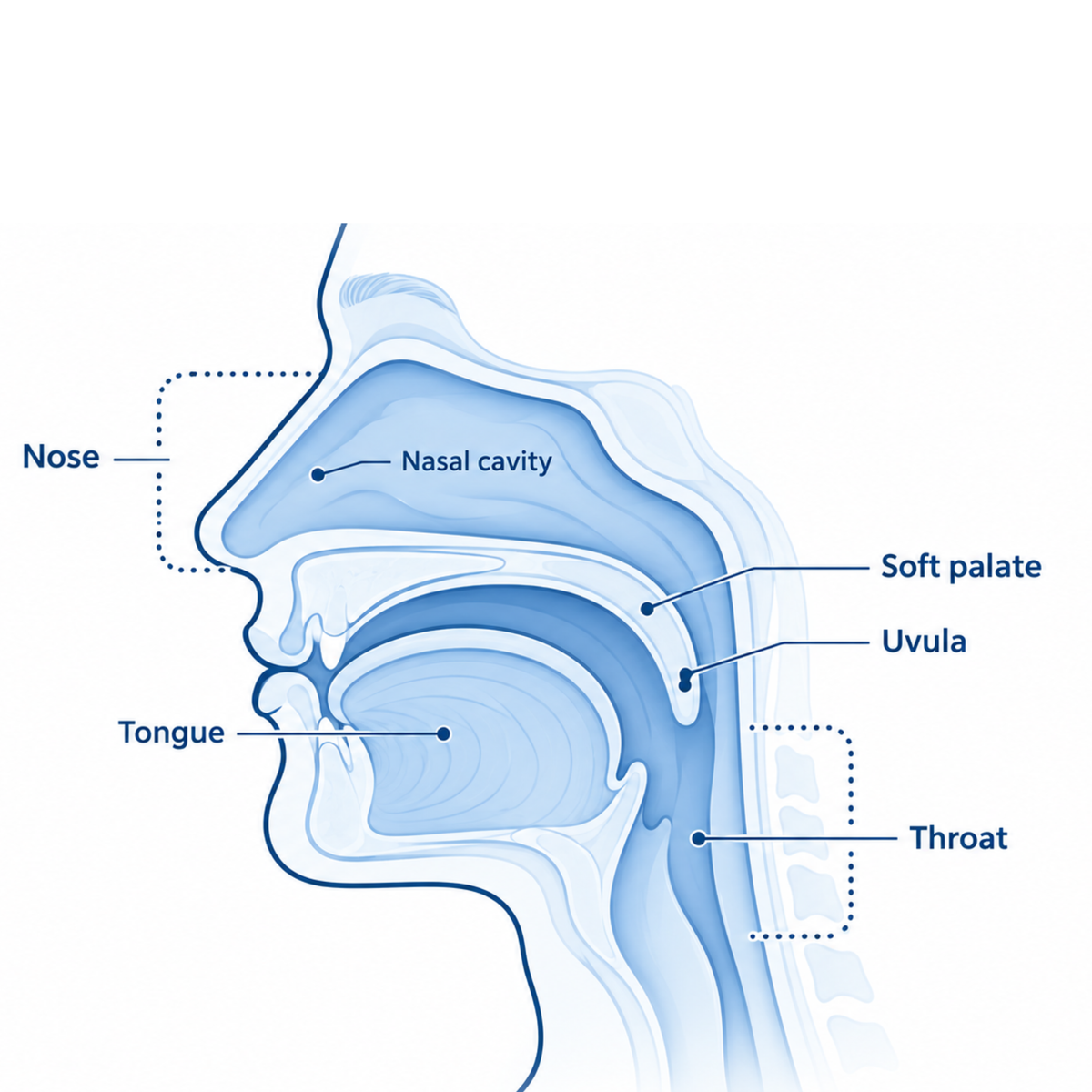
Mouth breathing, on the other hand, has disadvantages that are often unknown. Air inhaled through the mouth is not optimally filtered, humidified, or warmed. This increases the risk of infections, allergies, and irritation of the airways. Do you experience a dry mouth or tickle in your throat when you wake up? There's a good chance this is due to mouth breathing during the night.
When we are awake, it's quite easy to consciously focus on our breathing and influence it. During the night, however, we have no conscious influence over this. I discovered myself that I regularly breathed through my mouth, which amounted to about eight hours of dysfunctional breathing per night. If you calculate that over an eighty-year lifespan, it means we potentially breathe suboptimally for 26 years. The impact of this on physical and mental health is enormous.
Mouth breathing and sympathetic activation
Did you know that mouth breathing can keep your body in an alert state at night? When you breathe through your mouth, you activate the sympathetic nervous system, our fight-or-flight system. This means: an increased heart rate, shallow breathing, less deep sleep, and less recovery. You are, as it were, constantly "on," while your body should be relaxing.
Nasal breathing, however, stimulates the parasympathetic nervous system, the recovery and rest system. This ensures:
- Slower, deeper breathing.
- Lower heart rate and blood pressure.
- More oxygen uptake and nitric oxide production.
- Better sleep quality and morning energy.
In short: whoever optimizes nasal breathing can literally use the night to switch off the sympathetic "on" signal and reset the body. Tools such as mouth tape and nose strips support this mechanism: they keep the mouth closed, keep the nose optimally open, and help bring your nervous system back to rest. I myself also use mouth tape and nose strips to keep the nose optimally open and the mouth closed during sleep. The result? No more dry mouth, less muscle tension, more energy, and less snoring.
Nasal breathing is natural
Biologically, no healthy animal structurally breathes through its mouth. Even a cheetah, one of the fastest animals on earth, breathes exclusively through its nose during intense exertion. Dogs and cats also only use their mouths in emergency situations or to dissipate heat after intense exertion. From nature's perspective, it is therefore very logical that our body is designed for breathing through the nose and that mouth breathing should be the exception.
However, our modern lifestyle and diet have led to narrower airways and shallow mouth breathing, causing many people to unconsciously breathe through their mouths, especially during sleep, stress, or physical exertion. But from today, you can change that with very simple tools (like the nose strip below).

How to improve your nasal breathing during sleep
-
Mouth tape: a small piece of skin-friendly tape over the lips subtly keeps the mouth closed.
Nose strips: keep the nose optimally open, especially with congested airways.
Sleeping position: sleeping on your side prevents airway blockage by the tongue.
Breathing exercises: consciously practice nasal breathing throughout the day for deeper and calmer breathing.
After brushing my teeth, I immediately apply PurelyGoods nose and mouth tape. They are safe, effective, and comfortable enough to stimulate natural nasal breathing without extreme measures.
Conclusion
Nasal breathing during sleep is more than a physical habit. It is a natural reset that helps you return to rest, focus, and optimal recovery. By consciously training your nasal breathing and avoiding mouth breathing, you can greatly improve the quality of your sleep and benefit from the many health advantages associated with it.
Nasal breathing is the key to your gains at night! Want to get started right away? Discover PurelyGoods nose strips and mouth tape and give your body the rest and energy it deserves.
📘 Want to delve deeper into the power of breathing? Download Glenn's free e-book full of practical insights and exercises.
Deel:
The best sleep mask for side sleepers
Best Mouth Tape for Sleeping: PurelyGoods Reviewed by Experts